
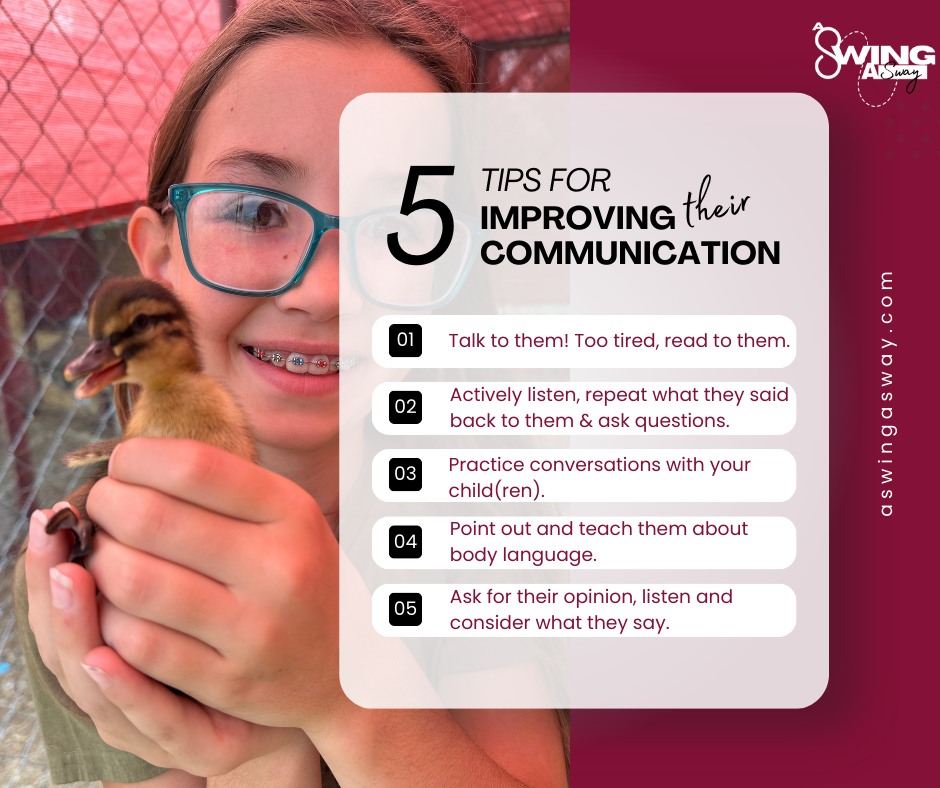
I didn’t add it to the graphic, but the first thing you need to do to improve them, is to improve yourself. If you want kids that listen, follow instructions and that are respectful- it starts with you. Listen to them, follow instructions and treat them with respect.
Some of us weren’t taught how to communicate effectively and we may need a class or someone to show us how to do it. Please take time to learn this skill if you need (I’d say we can ALL improve!). If you need resources, please reach out. I can help- I’m still in the process of learning myself.
More on the this and why I chose the tips I did:
#1: Talk to them! Too tired, read to them.
I know, especially when they are younger, how hard it is to muster the energy to talk to littles (or even know WHAT to talk about). When my kids were in the “I’m never tired” and the “Guess what?” or “Why?” stages the LAST thing I wanted to do was talk MORE! Reading aloud was my escape. I put those littles on my lap and mindlessly read the same book to them over and over. I could zone out, but they didn’t know. They heard communication, had a calm environment and the physical touch they craved. And I could basically sleep while reading.
Now that they are older, I’m trying to create engaging conversations with them because they just want to be left alone- and I don’t! Go figure the switch comes so fast! I was told it would, but some of those younger stages last too long to see it clearly.
#2: Actively listen, repeat what they said back to them & ask questions.
Being a sounding board is important for so many reasons, especially when our kids are facing adulthood and all the complex emotions that come with it. When we actively listen we can hear what they are saying without our own emotions, judgement and opinions entering the conversation (even our body language can speak when we don’t intend on exposing our thoughts. If you are actively listening, you likely aren’t overreacting and speaking loudly with body language.). Actually hearing what they are telling us is shown when we can repeat back some of what they say. You can then take it to the next level and ask follow up questions.
As an adult, I tend to keep friends that use active listening on a regular basis. Having a friend that is a sounding board helps me clarify what I’m needing and how to solve my own issues. It’s easier for me to have open conversations when I feel like I’m being heard taken seriously.
At the end of the day, isn’t this what we all want? To be heard…
#3: Practice conversations with your child(ren).
My mom did this with me for the conversations I was nervous to have when I was little. Then as I got older, I learned to do this in my own head for those HARD conversations. I understand we can’t guarantee what the other person will say, but we can anticipate different scenarios and tailor different responses. This is golden for kids (and adults) to practice because it helps keep communication clear and to the point. It can help calm nerves and narrow down what is important and relevant compared to what can be let go. Also a reminder to walk away and think it through before you lose your temper or say something you can’t take back, even if you walk away in the middle of the conversation. Talk your child through this process and what it might look like to excuse themselves respectfully until they are calm clear headed and ready to communicate again.
#4: Point out and teach them about body language.
Body language speaks louder than words and we want our kids to see it for what it is. Explain to them why their eye roll can come off as disrespectful. Or let them know “I’m rubbing my hands together because I’m excited to get started.” or “I’m tapping my fingers because I’m feeling impatient”. You can also use their body language to help identify what they are feeling. “Wow! Look at your smile! Are you feeling excited?” Or “I see you pinching the bridge of your nose, do you disagree with what I’m saying?” Of course, knowing these things yourself is necessary- do a little research to identify the most common body language and what it usually indicates- a quick search online will give you plenty of options to learn. Knowing some basics can not only help with regular conversations, but can also help us quickly recognize people with ill intent. Playing “emotional charades” together can help improve these skills! Write emotions on pieces of paper and act them out/guess what they are telling you with no words.
If you want to dig deeper like I did, because who doesn’t want a library of expressions- look up Annie Sarnblad. She teaches about micro expressions.
#5: Ask for their opinion, listen and consider what they say.
This will require your kids to reflect on how they feel and then communicate it back to you. Considering their answer (ie: their feelings) is going to make a huge difference in how they continue to communicate with you- it may seem irrelevant when they are young, but as they mature, you’ll want them to come to you with their lives. So ask them relevant questions like “Which library should we go to today?” and if you can make it happen, go there! If you can’t, ask them why they chose that location and explain why you can’t make it there at this time. You can ask simple questions like “Which do you like better- rainstorms or sunshine?” Or “Novels or picture books?” Then keep the conversation going! Remember to use phrases like “I think” and “I feel” that can help them keep conversations out in the wild amicable, open and ongoing.
Again, if you need extra resources, to talk things through or more examples, reach out. I’m here for all of it!
What communication skill have you mastered?
Talk soon,
L
What Do You Have To Say?